

Patrick Dalton is a member of the Metro DC Democratic Socialists of America.
“Pirro rips DC City Council for not extending curfew to prevent 'teen takeovers,' says 'do your job.’” - MSN, April 23, 2026
“...which has prompted a series of threats from President Trump to assert federal control over the city and block the socialist candidate from governing. She currently serves on the city council and is running on a platform centered on guaranteeing a slew of benefits for her constituents in classic socialist fashion. Her campaign website promises a "people first" platform, which includes healthcare for all, childcare for all, homes for all, and even good jobs for all.” - Townhall, June 29, 2026
“...mayoral nominee Janeese Lewis George, a Democrat, will inherit a new tax on everyday goods, with the D.C. City Council dead set on passing a 20-cent tax hike on all third-party deliveries.” - Washington Examiner, July 1, 2026
“While the federal takeover of the city’s police department ended in September, National Guard deployments have continued. Although the U.S. Constitution gives Congress ‘exclusive’ authority over Washington, D.C., the city has operated under its current system since December 24, 1973, when the Home Rule Act allowed residents to elect a mayor and city council.” - USA Today, June 12, 2026
“Janeese Lewis George, a socialist member of the Washington, D.C., City Council described as ‘D.C.'s version of [New York City Mayor] Zohran Mamdani,’ is likely to become mayor of the nation's capital after winning the Democrat primary this week.” - Fox News, June 18, 2026
THE LIMITED SOVEREIGNTY OF THE DISTRICT OF COLUMBIA IS UNDER ATTACK. Federal agents patrol the streets and deport our neighbors. The outgoing mayoral administration collaborated and complied in advance with the Trump administration on everything from removing Black Lives Matter Plaza to the Metropolitan Police Department’s work with ICE. Congress, with some bipartisan support, has overturned or preempted DC laws. The president directly interfered in local elections by threatening to take over the city if the voters chose Janeese Lewis George for mayor. After her resounding victory, he threatened again to suspend democratic governance and run the District directly.
Given the gravity of the situation, it may seem myopic to focus on language policing what we call particular parts of DC’s government, but it's precisely this imminent threat that makes our choice of words all the more important.
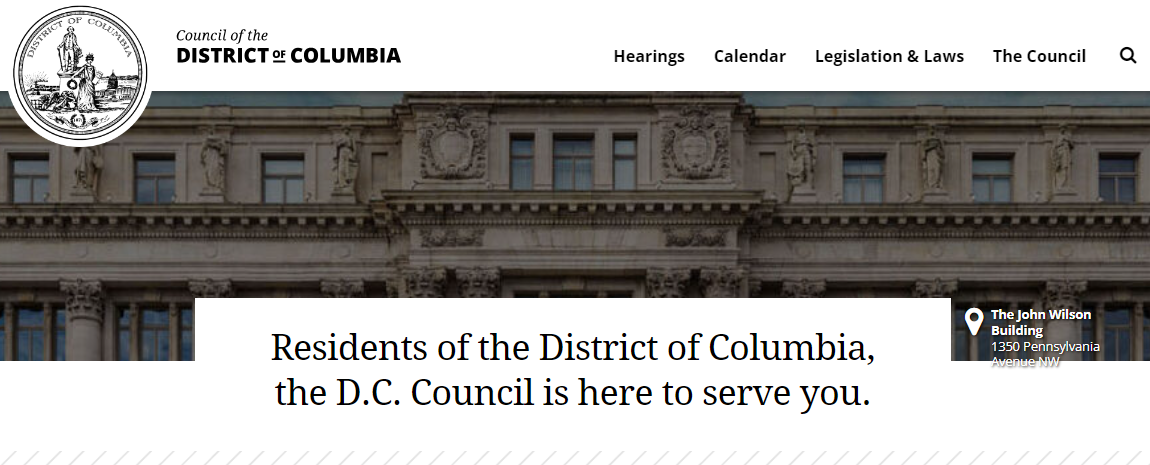
Neither the Home Rule Charter nor the Code of the District of Columbia make any mention of a city council. That’s because DC does not have a city council. DC has an elected legislature, like every state in the union. We call it the Council of the District of Columbia, or DC Council.
Supporters of DC sovereignty and statehood would do well to remember this point. An emerging nationwide anti-Trump coalition dedicated to aggressively fighting back against the president and his supporters will require DC statehood to achieve its aims. Trump's repeated attacks on DC sovereignty will likely trigger backlash and raise the national profile of the struggle for statehood. Local organizing, through Free DC, labor unions, community groups, and the Left, have helped keep the struggle alive, but the final determination on DC’s fate will be made at a national level.
Names are important. What we agree to call things can influence how others perceive them. Opponents of DC sovereignty and statehood, or people who accidentally carry water for them, call the DC Council a city council as a way to subtly undermine statehood principles. They seek to dismiss DC (and, consequently, its 700,000 disenfranchised residents) as a blue “Democrat” city seeking a special privileged status, not basic rights. Building upon the pervasive right-wing narrative that depicts cities as crime-ridden and dominated by corrupt progressives, their goal is to sidestep small-d democratic concerns about taxation without representation and reframe DC statehood as just another culture war issue. Many of the Fox News articles about Janeese Lewis George or federal intervention into DC are even tagged with the subject label “Blue City Crime.” This anti-city, anti-progressive attack on sovereignty is best illustrated in Democracy Deferred, in which authors George Derek Musgrove and Chris Myers Asch quote Patrick Buchanan calling the 1978 DC Voting Rights Amendment — which would have granted DC congressional representation but not statehood — an “affirmative action program” that would get rid of “two centuries of constitutional government . . . just so [civil rights activist] Julian Bond can have a Senate chair.”

The right wing has done everything it can to depict cities as incapable and undeserving of self-governance. In 2025, Texas doubled down on its sweeping preemptions of municipal legislation by empowering the state attorney general to withhold tax revenues from cities that adopted policies that might conflict with state law. The most common forms of preemption ban localities from regulating things like firearms, rideshare, rent control, paid leave, project labor agreements (PLAs), minimum wage, prevailing wage, fair scheduling, and more. In other words, almost every part of a progressive, pro-worker agenda at the city level. Democratic strongholds like Maryland are also guilty of dabbling in this narrative: Baltimore only permits 2 of its 12 school board members to be directly elected. Even among ostensible allies of the District, DC's legislature is often colloquially referred to as a city council, accidentally emphasizing its non-state status.
Calling DC's democratically elected legislature a “city council” is an explicit attempt to minimize its legitimacy at worst, an accidental reification of these attacks at best.
Is DC a city? Yes. Do DC laws make limited references to cities, like “city wards” and the “city administrator?” Yes. But these references are extremely rare. On the other hand, the DC Council is also tasked with passing budgets with major line items that handle federal programs typically issued to states. From the DC government’s own official history of home rule: “The powers and duties of the Council are comparable to those held by state, county and city legislatures, including the authority to adopt laws and to approve the District’s annual budget submitted by the Mayor. As the legislature, the Council is a co-equal branch of government and is part of a system of checks and balances similar to any other state government.”
DC has had many different forms of government since its founding over two centuries ago. Most of those forms of rule limited democratic input for residents in key ways, with presidential or congressional appointments placing guardrails on self-rule. Some of these forms included multiple city councils for the then separate cities (Georgetown, Washington, and Alexandria, etc.) that made up the federal district; others included an elected Districtwide House of Delegates. Each form failed to treat DC residents as full citizens with equal participation in American democracy.
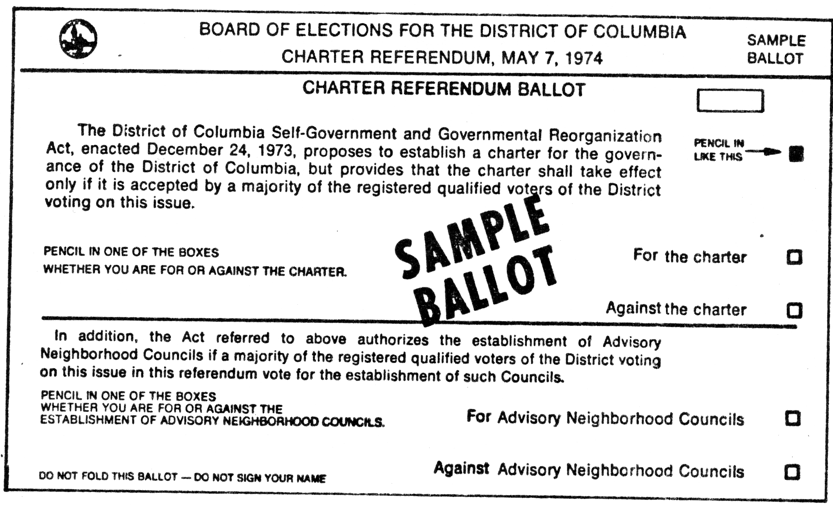
DC Home Rule, passed by Congress in 1973, finally gave Washingtonians the ability to elect their councilmembers and mayor. It was a massive step forward that must be defended. But home rule was a compromise, and DC’s residents have repeatedly made their demand for full sovereignty and self-determination clear. Article VIII of the DC Statehood Constitution, approved by more than 80% of voters in 2016, declares that the future Douglass Commonwealth (DC’s new name, once statehood is achieved) would transition the DC Council into the Legislative Assembly. The sitting members of the DC Council would keep their seats until it was time for their reelection as members of the new, expanded Legislative Assembly. Both the 1982 and 1987 voter-approved state constitutions for “New Columbia” also included language stating that the DC Council would transition into the House of Delegates. As such, the DC Council is simply our state-legislature-in-waiting.
The statehood movement has fought the “city” framing of DC for decades. DC Councilmember and Metro DC DSA chapter member Hilda Mason’s amendment to strike a reference to DC as a “city” and replace it with “the District of Columbia” during the 1982 Statehood Convention meeting was treated as so uncontroversial at the time it never even received a vote. The original author thanked her, saying “we’re interested in accuracy.”
We are not just some progressive city demanding unequal representation. DC is in a generations-long fight for self-determination and real democratic representation. We need to make that clear every time we talk about it, and we need to define ourselves as a state-in-waiting to the rest of the country. Labeling the District's current legislature as "just a city council" is a slight, intentional or otherwise, that risks defining the current system of governance, one born out of a hard-fought compromise, as permanent.
Not every slip up is malicious. Some DC councilmembers and candidates call it the city council. Many strong advocates for statehood may do the same. We should not be naive enough to believe that simply calling the DC Council by its actual name will magically grant statehood. But we should watch our words lest we illegitimize the struggle for statehood at the very moment it may be surging into the national spotlight again.
One of the very first people recognized to speak at the historic 1982 Statehood Convention was Dr. Howard Croft, longtime Metro DC DSA chapter member and statehood advocate. The District government had sent the convention delegates an affidavit and oath of office referring to them as “appointees.”
Dr. Croft rose and stated, “I’d like to know where this affidavit came from. They say we’re appointed. We’re not appointed; we’re elected by the people.” Another delegate added, “And not the federal government.” Dr. Croft continued: “Yes. Therefore, since I’m elected by the people of my ward, I will not sign the affidavit.” After some back and forth and a compromise suggested by Hilda Mason, the delegates only signed the forms after crossing out the words “appointee” and writing in “elected.”
May we all be as particular with our choice of words in the defense of DC sovereignty as Dr. Croft.

