
Leah T. is a member of the Metro DC Democratic Socialists of America and is an enrolled member of the Blackfeet Nation.
Note: This article contains mild spoilers for the novel The Buffalo Hunter Hunter and the film Sinners.
I DON'T KNOW WHEN, EXACTLY, vampires became a staple in my life, but it’s been long enough that they feel more like friends than monsters.
I’ve always been a horror fan. Growing up, we spent weekends at my dad’s house, and his only rule was that if we watched a horror movie with him, we had to sleep in our own beds afterwards, even if we had nightmares. So while my brothers were scared off by The Exorcist and Child’s Play (though that one might have less to do with the movie and more to do with my older brother and I taping a knife to a replica Chucky doll and putting it at the foot of our little brother’s bed in the middle of the night), I stayed up with my dad and watched movies I was definitely too young to see.
Not all of my vampire consumption has been in the horror movie realm. I watched My Mom’s Got a Date with a Vampire and Lost Boys practically on repeat, I stole my mom’s copy of ‘Salem’s Lot and read it straight through in one night, and my favorite part of Forgetting Sarah Marshall is Jason Segel’s Dracula musical. This past year, when I was talking to my then partner about how a Blackfeet vampire story had partially inspired Ryan Coogler’s 2025 blockbuster Sinners — while wearing a Twilight T-shirt and looking down at my Buffy tattoo (Miss Edith, for Drusilla) — I really had to take stock of my life and choices.
But the thing about vampires — about any monster, really, but especially vampires — is that they’re so much more than just a sum of their parts. That’s a big part of why I’m drawn to horror: beyond the nostalgia of growing up on the classics, horror media acts as a kaleidoscope, reflecting different parts of our world back at us as it turns.
When Sinners first came out, all I knew about the movie was that Michael B. Jordan was in it and that writer-director Ryan Coogler had named acclaimed Blackfeet horror novelist Stephen Graham Jones as one of his influences for the film — which is to say, I didn’t need any more information before I was coordinating people to go see it with me. A Stephen Graham Jones reference would have been enough to sell me on its own; though I sometimes lie and tell white people that he’s my cousin when they mention loving his books (we’re both Blackfeet), I would never lie about how important his books are to me. It’s rare for me to read a book where I can understand what message an author is building based on the names they use or the stories they reference, but reading a Blackfeet story written by (basically) a beloved cousin? It feels like coming home.
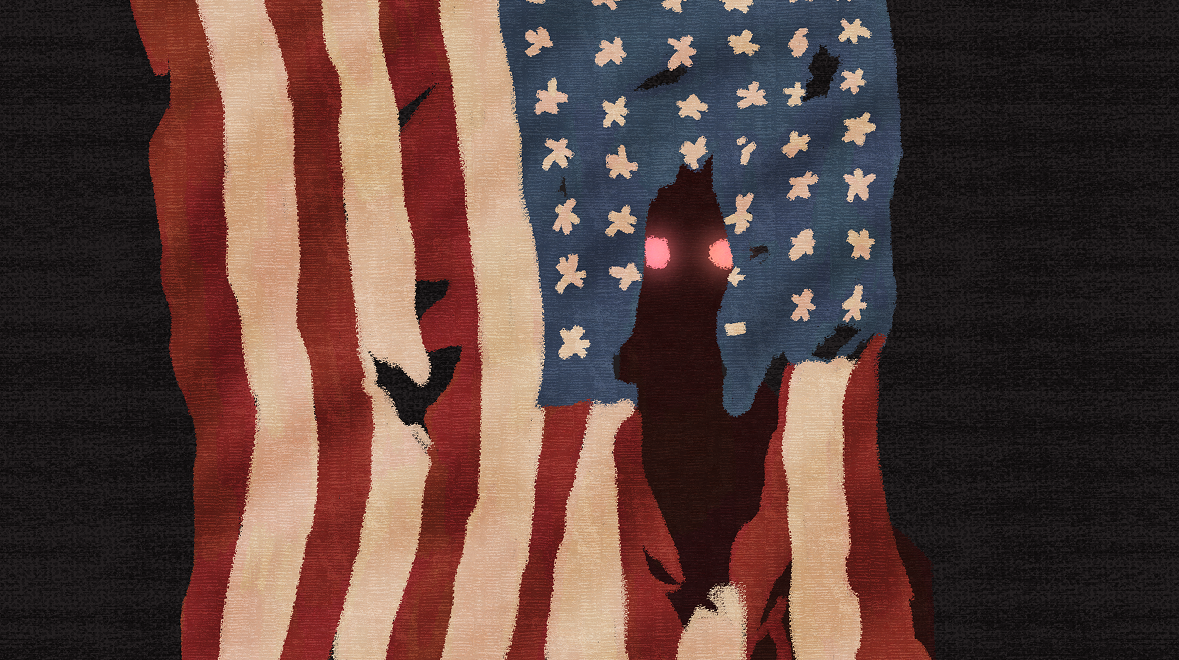
One month before Sinners came out, Jones published the novel The Buffalo Hunter Hunter, which follows the story of a Piikani (or Blackfeet, or Piegan, or Niitsítapii, depending on who you talk to and when) vampire, Good Stab, as recorded in a private journal by a Lutheran pastor and then discovered by his descendant 100 years later. Jones’ novel is more than a vampire tale. It’s an entire universe all on its own, as Good Stab recounts the same story that Jones’ family, that my family, that so many other Blackfeet and Indigenous families lived through.
Good Stab and those interacting with him don’t call him a vampire; most consistently, he is referred to as a nachzehrer, a creature from German folklore whose name translates to “after-eater.” The only time the word “vampire” is used in the novel is at its conclusion, when Good Stab disappears into the horizon: “He turned his back on me and he fell in with his people, riding west for the Backbone, and within a few paces, the storm had folded the nachzehrer into itself. No, not the vampire. The Blackfeet.” With that sentence, Jones ties a knot between the violence of colonialism and its casualties, namely that the harm of colonialism extends past life and can never be forgotten.
The French were the first white people to walk on Blackfeet land (the Blackfeet word for someone French is niitsáápiikoan, which literally translates to “the original whiteman”) and growing up, whenever my aunt or uncle made jokes about us also being French, my dad used to joke that he got rid of all the French blood in his veins by having leeches suck it out. My brothers and I would ask how the leeches could tell the difference between French blood and Blackfeet blood; my dad had a simple explanation: “oh, that’s easy: the French blood was the black blood.”
When reading The Buffalo Hunter Hunter, I kept thinking about that joke. My dad kept repeating it partly because it always made us laugh, but also because centuries after we even had to coin the word niitsáápiikoan, he was still carrying the pain and violence of its necessity. The trauma from colonization doesn’t fade just because time has passed, especially when it’s ongoing — my grandparents were survivors of the boarding school era, and those scars don’t fade easily. Jones’ novel explores what happens when those scars are still fresh, when the pain echoes even after death.
Among Good Stab’s pile of dead are the invaders, those who’ve encroached on Blackfeet land as if it was their own, who killed our buffalo for sport and for the vengeance of the land not bending to their will. Good Stab is an exploration of what happens when we’re removed from everything that makes us Blackfeet. As a twist on vampirism, Jones injects his vampires with the spirit of colonialism and assimilation: in trying to stay alive, Good Stab learns that he becomes whatever he feeds on. If he survives by only drinking from bears? He slowly becomes a bear. If he tries to fight the theft of his land and people by only drinking from the invaders? He becomes a white man. In order to remain Piikani, he must drink from his own people, directly contributing to the invaders’ cause by adding to the growing number of dead Indians. In a novel about a bloodthirsty vampire, the invaders and the American empire are the ones cast as the monsters, seemingly unstoppable until they’re met with an immoveable object: Good Stab, illustrated in perhaps the most iconic quote of the novel when he says, “What I am is the Indian who can’t die. I’m the worst dream America ever had.”
Karl Marx once wrote that capitalism came into the world “dripping from head to toe, from every pore, with blood and filth.” Jones inverts that idea: instead of capitalism being borne from blood and filth, Good Stab imagines that that’s how colonialism will leave our land: “We never called this place ours like that, though, but that didn’t mean it was yours. Put up all the fences you want. Pikuni know what to do with fences...and we know what to do with napikwans who hammer them into the dirt, too. When Chief Mountain finally crumbles, all of you will see.”
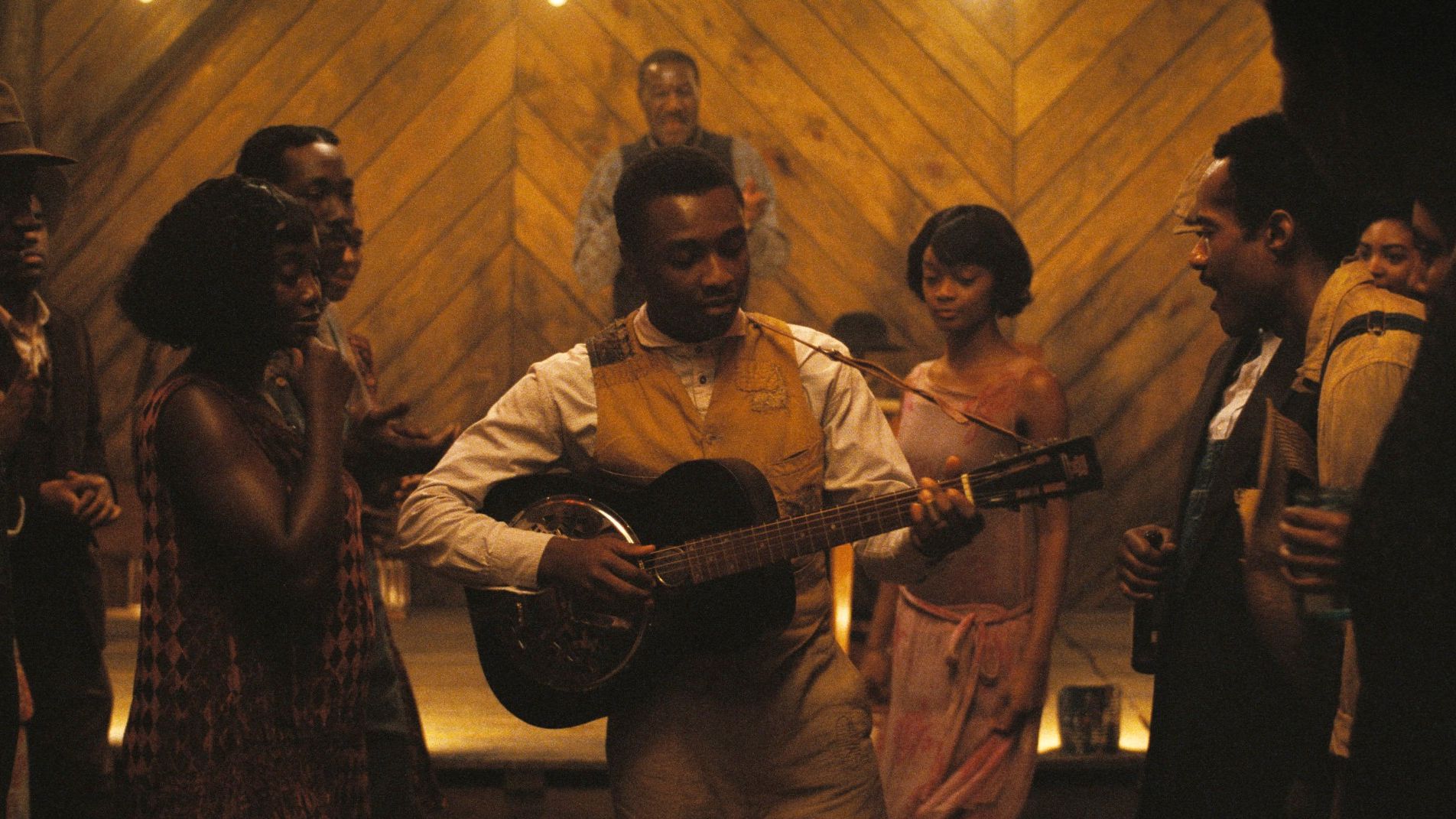
Sinners follows twins Smoke and Stack (both played brilliantly by Michael B. Jordan) as they return home to the Mississippi Delta to open up a juke joint before being confronted by both the Ku Klux Klan and vampires. Coogler spends an incredible amount of time building his world and characters, knowing that the average viewer is more familiar with vampire lore than 1932 Mississippi. As the twins prepare for the juke joint’s opening night, the viewer is introduced to a cast of characters: Sammie, the twins’ younger cousin who’s hiding his love of music from his fundamentalist preacher father; Mary, the white-presenting woman Stack had been in a relationship with before pushing her to live life as a white woman; Annie, Smoke’s wife whom he hadn’t seen since their infant daughter passed away; Bo, Grace, and Lisa, a Chinese family who run the town’s grocery store; Delta Slim and Pearline, musicians for the opening night; Cornbread, hired for the opening night; and more, building out a town that feels like it came straight from the pages of an archived newspaper. By the movie’s end, Sammie is the only true survivor of the night.
The intersection of vampirism and colonialism lives on in Coogler’s film, starting with the introduction of Remmick, an Irishman and the primary vampire in the film, being chased by the Choctaw vampire hunters. As Remmick’s intentions to rebuild his lost community are slowly revealed, it makes sense as to why his path crossed with theirs: the Choctaw Nation, fresh off of the Trail of Tears, sent aid to Ireland during the Potato Famine, when Remmick was still in Ireland. It makes sense that Remmick, a man who has lost his community, a vision of Good Stab if he had only drank from the invaders, would seek out a nation whose history was braided with his. It makes sense that Remmick originally refers to his hunters as Choctaw, a nod of acknowledgement that bleeds through his true intentions, but switches to “Injun” when he spies the white Ku Klux Klan robes inside the house where he takes shelter. And it makes sense that Remmick is an Irish vampire who first docked in Boston, carrying the weight of centuries of colonization and attempted cultural genocide on his shoulders.
Remmick and the Choctaw’s sunset chase is a glimpse into the cyclical world of colonization: the English “perfected” their methods of colonization on the Irish before turning those same methods to the Indigenous nations of the Americas. Under the violence of the empire, the English tried to strip the Irish and Indigenous nations of their culture, language, and connections. Though they were not ultimately successful in that goal (just look at modern revivals of Gaeilge and Indigenous languages), countless did lose their culture and lives to the brutality of colonization. In Sinners, that loss becomes the heart of the film: what might someone do in order to reconnect with their community if given the chance? What might people do to fight back against losing theirs?
Sinners is full of moments like that, small but so significant that the staggering amount of work by the numerous cultural consultants on the film is unavoidable. (I went down several 3am rabbit holes for weeks after seeing the movie; most impressive was the decision to have Remmick speak to Grace in Toisanese.) And like Good Stab in The Buffalo Hunter Hunter, Remmick and the other vampires in Sinners aren’t existing as an aside in a metaphor about colonization; they’re existing as the focal point.
In both Jones’ and Coogler’s worlds, vampirism is both the infection that divorces vampires from their culture and the method they can use to reconnect with it, mimicking the cycle of the exploited becoming the exploiter. For Good Stab to remember what it’s like to be Pikuni, he has to murder his own people; for Remmick to reconnect with his community, he has to murder those whose musical talent can pierce the veil, like Sammie summoning the ancestors in the juke joint. At one point in the novel, Good Stab says that “to be Pikuni and be alone is to not be a person anymore;” Remmick (and Mary, and Sammie, and Smoke and Stack, and Annie, and, and, and) echo that sentiment as well. The power of community, and the anguish when that community is harmed or destroyed, is almost tangible in every frame of the film.
Colonialism is always a violent, brutal act; people don’t give up their families, their cultures, their land without a fight, something Coogler explores from different angles. It’s not a mistake that Mary, the white-passing woman so declaratively named as “family” by Annie, is the first to be turned by Remmick. It’s a commentary on the lures that colonists often dangle in front of those less powerful; on the levels of access to different cultures; on the ways that colonialism can make communities turn on one another. And similarly, it’s not a mistake that Annie, the community’s spiritual leader and healer, is the first to figure out what’s happening and prepare the others to fight back. Similar to Sammie’s talent, Annie’s knowledge makes her valuable; makes her dangerous. Another mirror of colonialism: targeting the unique knowledge and practices of the culture under attack in the name of “the greater good.” To the colonizers, to the vampires, Sammie’s music and Annie’s hoodoo are seen as cultural commodities, something they should be able to take for their own — exactly how the invaders see the land and its resources in The Buffalo Hunter Hunter.
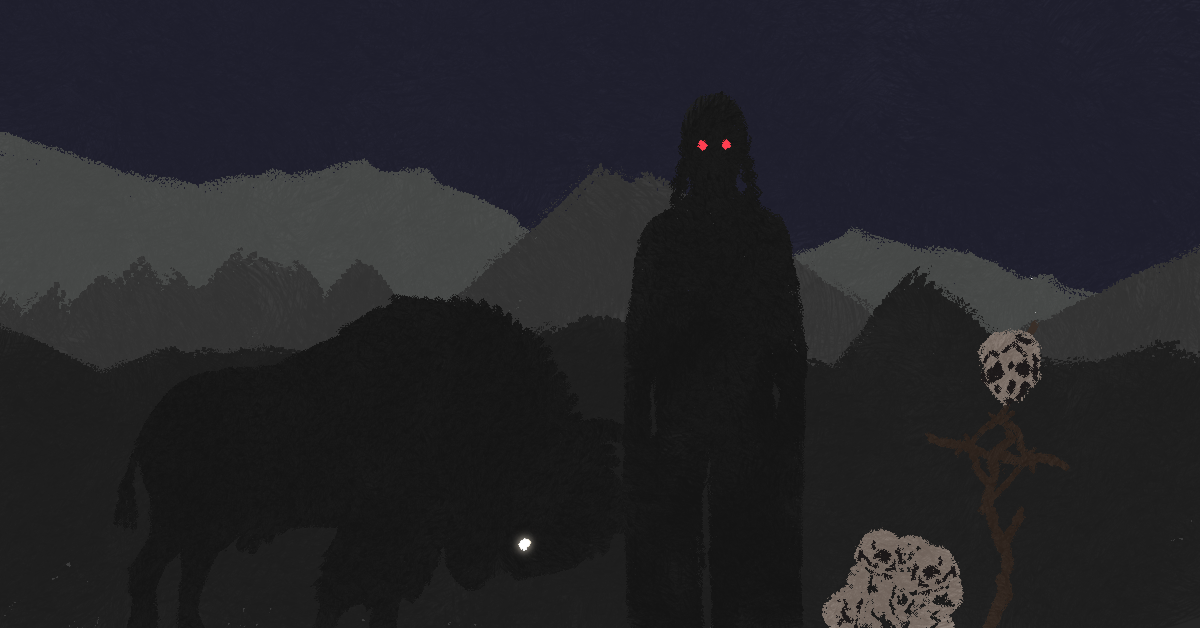
Vampires are not depicted monolithically across media: just look at Spike fighting for a soul in Buffy or the tug-of-war between Lestat, Louis, and Armand in Interview with the Vampire (the TV version only; I am nothing if not a Jacob Anderson supremacist). Good Stab and Remmick reflect vampires’ varied cultural shapes. Though I will always root for everyone Indigenous, Good Stab is anything but a hero — he, like Remmick, is trapped in a vicious cycle. Colonialism is never-ending consumption with no chance of satisfaction, because there is always more to destroy: the perfect vehicle for a vampire metaphor. And the pain of colonialism is more than just what is destroyed in its name but also what you must destroy from yourself in order to survive. There is no “ethical” way to be a vampire, despite what the Cullens might have us believe (although to be fair, one member of the beloved Twilight family is a Confederate soldier whose superpower is empathy, so Stephenie Meyer really wasn’t trying to hide anything). The only way out is to end it. For Good Stab, that means finally disappearing into the land and his ancestors, to a home where he can be Pikuni with his mouth cleaned of blood. For Remmick, it’s to be consumed himself, burning in the same fire he brought to the world even as he fights against it. For Annie and Smoke, it’s to die by any way other than fangs (Annie stabbed before she can be turned, Smoke shot during a showdown with the KKK); to be able to walk into the afterlife knowing they resisted the violence of colonialism as best they could.
Towards the end of The Buffalo Hunter Hunter, Jones writes: “This, I believe, is the story of America, told in a forgotten church in the hinterlands, with a choice of the dead mutely witnessing.” We don’t have a direct word for vampire in Blackfeet, but the word for American is innóísttoani, which translates to “carries a long knife” — a nod to the cycle of violence perpetuated on our soil. In the novel, in Sinners, in so many vampire stories told and retold, the story of America is always the story of colonization: an endless hunger for power, for the world, one that echoes across generations until finally someone — a Good Stab or an Annie — says, “enough is enough.”


