
Coileán (kwih-LAWN) is an ecosocialist organizer in Metro DC DSA, the third chapter he has been involved in. In DC, he served on the leadership of We Power DC, a local ecosocialist campaign. Nationally, Coileán worked with the late Ecosocialist Working Group, the Green New Deal Campaign, and co-founded DSA’s national degrowth caucus (caracoldsa.org).
THE IMPERIAL HEGEMONS ARE ON THE MARCH. As Israel and the United States forge ahead with their (paused, for now) futile war of choice in Iran, the ancient Persian country has retaliated asymmetrically by attacking nearby US bases and launching strikes on Gulf-area fossil fuel infrastructure. Combined with Iran’s conditional closure of the Strait of Hormuz — through which 20% of global oil and gas supplies transit — these events have sent oil and gas prices skyrocketing, portending a possible global recession.
The world is witnessing a world-historic oil shock that could acutely harm the global working class, especially the poorest among us. This is all due to Israel’s unhinged, insane desire to destabilize Iran, a country roughly four times the size of Iraq that boasts more than 90 million people and a military system built to withstand prolonged conflict. Western capitalists are clutching their pearls like we’ve never seen before. As Isabella Weber and Gregor Semieniuk write in The New Statesman, “one thing is certain: there is a blow coming for the global economy through the supply chain, no matter how soon the war ends,” characterized by “inflation, redistribution shocks, shortages, stagflation and global financial instability.” The authors elaborate how “the far right is the likely winner,” as such effects will by and large strengthen capital at workers’ expense.

While oil prices and widespread inflation represent two of the most palpable effects of this conflict, fragile supply chains mean another critical sector will suffer — food. This war is likely to cause almost immediate damage to global agriculture through increasing energy and fertilizer costs as Africa and Asia begin their planting seasons, potentially pushing tens of millions into acute hunger.
The illegal, unprovoked war on Iran has thrown several truths into stark relief in dramatic fashion. First, petrochemicals have become an existential weak link for capitalist civilization. Global society metabolizes fossil fuel as its lifeblood. Petrochemicals go into the production of everything from jet fuel and pharmaceuticals to semiconductors, medical imaging, and industrial manufacturing. Much of Europe could freeze without a steady supply of methane gas. Such over-reliance on fossil fuels leaves societies increasingly vulnerable to disruption; all this despite scientists’ years-long global consensus that we need “rapid and far-reaching transitions across all sectors and systems… to achieve deep and sustained emissions reductions and secure a liveable [sic] and sustainable future for all.”
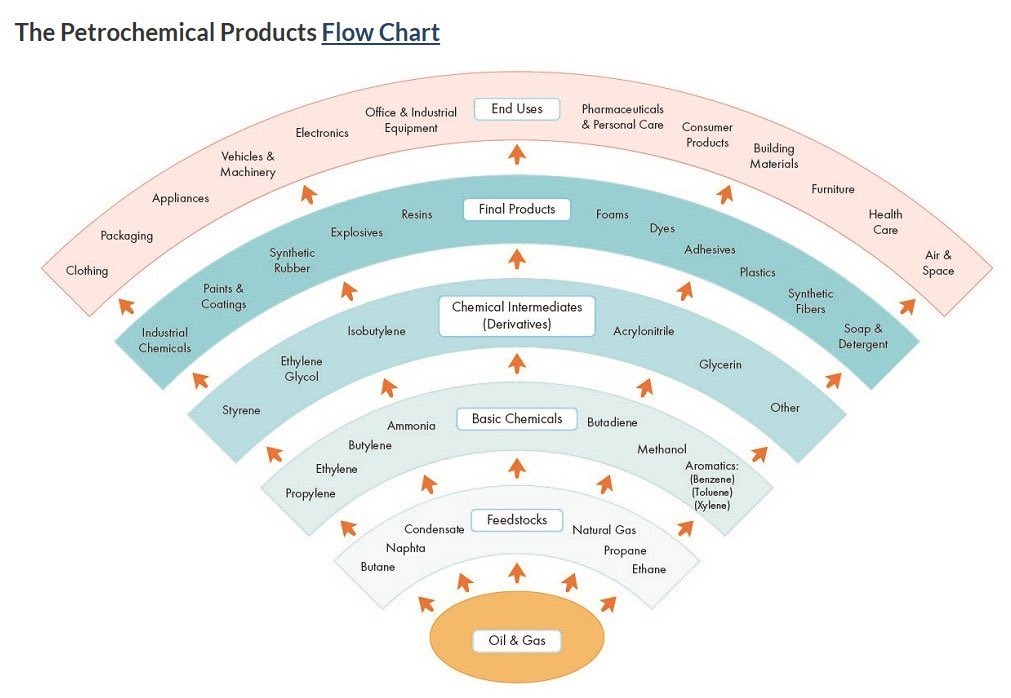
The Gulf region and Strait of Hormuz represent a single point of failure for the production not just of oil and gas, but many other commodities such as chemicals — the region is exposing deep fragility in the global capitalist system. As Peter McKillop writes, “fossil fuels aren’t a shield against chaos. They are a conduit for it.” Fossil fuels’ unparalleled profitability make them lightning rods for conflict.
Humans and their societies are utterly dependent on fossil fuels to grow, process, transport, and make food. To the world’s misfortune, 58% of synthetic fertilizer production depends on fossil fuels, namely methane (euphemistically misnamed “natural”) gas. As a result of the imperialist war in the Gulf, methane gas production has taken heavy blows, sending the prices for some fertilizers soaring 30-40%. Alarmingly, because the Strait of Hormuz facilitates 30% of global fertilizer trade, the war could endanger two key ingredients in synthetic fertilizer production, ammonia and urea. Reuters reports that “there are no strategic global stockpiles for fertilizers,” so if we lose them, many national food systems could soon be imperiled.
It is in the interests of no one but capitalists to have such a key food system input entirely reliant on fossil fuels, a volatile class of commodities at the utmost mercy of geopolitical power plays and dangerous price fluctuations. Socialists must organize against fossil capitalism by working to transform our toxic, industrial, and unjust food system into one that empowers workers and communities around the world to feed themselves while regenerating nature.
How is it that a regional war halfway across the world could have such a disproportionate impact on global food systems? Because of humanity’s reliance on industrial agriculture. Industrial agriculture (IA) was the inevitable creation of capitalism, a social system reliant on unlimited physical expansion and a logic of violence against land and labor. The story of how IA arose in the United States is a complex yet vital one for understanding how we got here.
According to Johns Hopkins University, during the 20th century, agriculture “underwent greater change than it had since it was first adopted some 13,000 years ago.” The pillars of this massive change? Specialization, mechanization, chemical inputs, and consolidation and concentration of capital. Before IA gradually dismantled traditional food systems in the US, the typical American farm produced many different products, both animal and plant. But over the last 150 years, farms have become a kind of land factory, with outputs — such as grains, animals, vegetables — and inputs, such as feed, fertilizer, antibiotics, and pesticides. The new logic was actually the same logic capitalists had been using to run factories and exploit workers for decades: maximize efficiency and productivity while minimizing labor and costs. And this new system was inherently dependent on oil for energy and feedstock — it needed coal, oil, and gas to power itself, as well as to create fertilizers and pesticides. Diets changed as emboldened agribusinesses promoted and normalized fake butter substitutes and industrial seed oils to displace traditional fats like coconut oil, lard, suet, and butter.
With IA, the landscape changed dramatically, too. Whereas rural areas once boasted diverse “agro-ecosystems” mixing crop and animal production, pastures, and woodlands, we now had monocultures — large, single-crop farms specializing in just one product. These new monoculture-based economies of scale pressured farmers to consolidate into larger and larger operations, crowding out smaller, more biodiverse farms. Our food system further changed for the worse as capital consolidated animal slaughtering and processing operations, leading to a decline in once-abundant local slaughterhouses.
If farms became factories, farmworkers became factory workers — and they have traditionally been some of the most vulnerable workers in our society. Both the National Labor Relations Act of 1935 and the Fair Labor Standards Act of 1938, two of the US’s cornerstone labor laws, explicitly excluded farmworkers. This gave owners and capitalists the power to exploit the people who keep us alive by growing our food in all imaginable weather conditions, day in and day out. Even though extreme heat has been increasing since 2015, as of 2026, farmworkers still have no federal heat protections in place.
Monocultures were central to the so-called Green Revolution (GR), the neoliberal, 1960s project to address hunger by focusing on maximizing efficiency and crop yields through chemical fertilizers and mechanization. As agroecology expert Miguel Altieri details, the GR’s intensification of agriculture may have enhanced crop production — but it also “proved to be unsustainable as it damaged the environment, caused dramatic loss of biodiversity and associated traditional knowledge, favored wealthier farmers, and left many poor farmers deeper in debt.”
In many ways, the world is still reeling from the effects of the Green Revolution. IA’s heavy reliance on fossil fuels continues to worsen climate change. Fertilizer use generates the potent greenhouse gas nitrous oxide (N2O), and conventional pesticides and herbicides — like neonicotinoids and RoundUp — wreak havoc on human health and decimate bee populations. By organizing food production around monoculture, IA treats land as if it were barren and expendable, when the exact opposite is true.
Even worse: In their current form, global food systems fail to meet the world’s dietary needs, with 1 billion people hungry and 2 billion people overweight. Widespread hunger and diabetes-obesity are two of the biggest manifestations of malnutrition, and both stem from the fact that food systems exist to maximize profits, not optimize human diets. From corporate consolidation to malnutrition and the chronic disease epidemic, the modern food system fails to provision human and planetary health, driving instead the deterioration of each.
The causes of hunger are complex, including poverty, conflict, and food loss. But there is no excuse for hunger on a planet that produces enough food for 10 billion people. Twenty percent of all food produced goes to waste, amounting to 1 billion meals per day; this equals $1 trillion in total losses to the global economy.
Clearly, nothing about the industrial food system is sustainable or desirable. By prioritizing size and efficiency over quality and nutrition per acre, modern farms crank out nutrient-poor foods laden with toxins that harm human health and the environment. Consolidation incentivizes the cheapening of food quality at everyone’s expense. By contrast, creating a food system within planetary boundaries to reverse chronic disease and ecosystem destruction would mean relocalizing food production, making it economical, organic, biodiverse, and as free of toxic inputs as possible. Strong state support will be vital to such food systems transformation toward sustainability and agroecology. Effectively transitioning our food systems away from fossil fuels will harden them against oil price shocks, as well as energy and fertilizer shortages we are very likely to witness as a result of the Iranian war. This is what socialists must organize for — for the good of our farms and the life-support ecosystems that keep earth habitable for us.
The war in Iran is exposing the world’s reliance on the fossil fuels destroying our life-support ecosystems — and making clear the urgent need for a just transition to a green economy. What ecosocialists and others on the Left must contend with is that equitably transitioning the food system is just as urgent as quickly phasing out the fossil fuel industry. They go hand in hand. If we do the latter without the former, we are setting up the food system — and society itself — for collapse as extreme weather intensifies.
Remaking our food systems around worker and community control must be core to our project of realizing a socialist society. It is also vital to our work of saving the life-support ecosystems, and earth systems, that our species depends on to survive. Socialists may be unaware that the most important group of climate scientists on Earth, the International Panel on Climate Change (IPCC), has said that land-based solutions — including agriculture, forestry, and ecosystem management, of which agriculture is a key part — “can not only provide large-scale reductions of emissions but can also remove and store CO2 at scale,” including benefits to biodiversity and ecosystems. Soil is the largest land-based system that stores carbon — and the most powerful way to enhance soil carbon storage is through agroecology. Agroecology is the holistic, integrated, and Indigenous-informed science of designing and maintaining sustainable food systems. It’s about food production with nature, rather than against it. Current evidence suggests that fully implemented sustainable agriculture could help offset 10-15% of the world’s annual greenhouse gas emissions.
With the Iran war threatening an energy crisis worse than what we saw during COVID-19, and one based on supply rather than demand disruption, the Left has an opportunity to elevate sustainable food systems to their just priority — not as a strategically optional issue, but rather a central tenet of our movement. A survival imperative. (Indeed, the crisis may already be accelerating the global transition to renewables and electrification. Sam Butler-Sloss of the global energy think tank Ember recently opined, “[high] fossil prices drive switching, making already cheap electrotech even more competitive… With electrotech, nations now have the tools to increasingly eliminate imported fuels altogether.”)
We urgently need to bring about a just transition to create a global food system based on food sovereignty and justice, not biopiracy and poor working conditions for farmworkers; biodiversity, not monoculture; one based on climate resilient, small- and medium-scale farming, not industrial farms. The new food system must use integrated pest management and organic principles to maximize human and planetary health, instead of applying toxic pesticides that cause Parkinson's Disease, cancer, and other maladies. Instead of a highly unequal, corporate-controlled food system dependent on toxic fossil fuel-based inputs, we must seize the means of food production to create a liberatory food system for all.
Justly transforming the world’s food system would empower global South countries with national sovereignty, including food sovereignty, so they could chart their own developmental course and prioritize feeding their populations first. But while we may aspire to global transformation, we must not neglect our responsibility to change local conditions stateside.
Internal dynamics on the Left reflect the broader societal tendency to take food systems and food workers for granted. Even on the climate Left, of which I am a part, we have a lamentable tendency to deprioritize — or even dismiss altogether — food systems and rural communities. Yet without them, we couldn’t do socialism. We would starve.
Granted, community gardens are modestly popular among Democratic Socialists of America members and in some DSA chapters. However, while useful for mutual aid and community building, they are an incomplete approach to food systems organizing without rural-urban solidarity work like farmworker organizing. Part of the deprioritization I mention above is understandable; the US population, and thus socialist and leftist capacity, is concentrated in urban areas. Socialists in DSA focus on local-level work in their own or adjacent communities by default — which makes sense — and consequently spend most of their time organizing in cities and neighborhoods. But have we been neglecting rural-urban solidarity work to the detriment of the movement? I believe so.
I am not the first person on the Left to acknowledge this. I strongly agree with AJ Kohler, who writes, “...in order to form a movement that can beat the capitalist class, socialists and DSA must develop a dedicated rural organizing strategy… Census data indicates that about 20% of the entire population lives in ‘rural’ areas…”
At least some socialists have been concerned about this for some time. Several years ago, a Rural, Suburban, and Small City DSA caucus formed to advocate for priorities that benefited smaller chapters at the 2019 DSA National Convention in Atlanta. To my knowledge, that caucus has since dissolved — but the sentiments behind it have not, because DSA has many rural chapters. Ongoing advocacy has resulted in promising developments for smaller and rural chapters. Dues-sharing, wherein chapters receive a cut of the dues payments their members make, has facilitated fairer resourcing for DSA’s urban and rural chapters alike. Recently, the DSA National Political Committee passed a resolution to increase dues shares to chapters significantly through DSA’s 2027 fiscal year, a promising move to create even more equity across less resourced chapters.
For Metro DC DSA, a strong first step for farmworker organizing would be to get the lay of the land by reaching out to organizations such as the National Sustainable Agriculture Coalition, Virginia Farmworker Advocacy Network, Farmworker Justice, and the legendary United Farm Workers union. These organizations may be well-positioned to consult us on how and where to connect with local farmworkers, in addition to understanding the extent of unionization in local agriculture. From there, DSA members could connect directly with farmworkers in the DMV, learn about their issues and concerns, and solicit ways or potential campaigns for advancing their causes.
We can also build stronger urban-rural relationships within DSA. Several years ago, I organized a Regional Solidarity Conference in Northern California to build connections between urban and rural chapters. At the time, I was active in DSA’s East Bay chapter, and Fresno DSA was kind enough to host the conference. The concept was simple: each chapter gave a presentation on its activities, strengths, challenges, and help needed. We were treated to a tour of Fresno, a city in the heart of California’s vast, heavily rural, and agricultural Central Valley — and a city that coastal California routinely dismisses. It was very rewarding to learn from our rural comrades, dance cumbia, and socialize with them. I’m proud to say that that effort led to the strengthening of ties among Central Valley chapters. This is just one example of what is possible when urban chapters intentionally set out to foster ties with their smaller, more rural counterparts.
The Democratic Socialists of America has matured and grown tremendously in the past seven years, through several fraught national leadership cohorts and dramatic political crises. Yet we have a long way to go to strengthen rural-urban solidarity on the one hand, and build an effective campaign for sustainable food systems on the other. Socialists should demand a climate-resilient, worker-controlled, planned, and decentralized food system that is not reliant on single points of failure. We should organize for a food system whose core principles are food sovereignty, carbon negativity, ecological regeneration, and food justice. Without food, the global working class would starve, and societies everywhere would collapse in short order.
We should no longer take food system workers and the complex ecosystems that allow food to happen for granted. Through farmworker organizing, forging urban-rural solidarity, and advocating for sustainable agriculture policy, we can help evolve the food system from one based on waging war against nature to a system based on food sovereignty, economic justice, climate resilience, and healing the “metabolic rift.” The socialist movement’s success depends on it.


