Written by Leah T, photos by Zach B. Leah T is a member of the Metro DC Democratic Socialists of America and the MDC DSA Abolition Working Group. Zach B is a photographer, a member of Metro DC DSA, and a member of the Abolition Working Group.
CARCERAL SYSTEMS — the networks of institutions, policies, and practices used to control, punish, and confine people — are everywhere around us. They’re baked into the media we consume, they’re protected in the laws that rule every aspect of our lives, and they’re quite literally built on the backs of Indigenous and Black people from across the centuries. This is even more true in Washington, DC, where we’re in the heart of the empire in a particularly carceral way: DC has more police per capita than any other city in the US with the Metropolitan Police Department (MPD) alone, completely ignoring the alphabet soup of federal agencies headquartered here.
In a world where carceral systems are prioritized over all else and people are seen as disposable, abolishing the police and the systems they work in has never been more important. Angela Davis wrote that “prisons do not disappear problems, they disappear human beings;” that remains as true now as it did in 1998 when Davis penned those words.
Abolition has been a part of my identity for as long as I can remember: I’m Indigenous, with a very brown dad and younger brother, and one of the first things I remember my dad teaching me was how important it was to lie to the cops — because all they do is cause harm and perpetuate a system that kills us. From both Davis and my dad, I learned how that system works in practice (somewhere beyond, my dad is kicking his feet with glee at being put in the same sentence as Davis).
Abolition means more than just breaking the carceral system that exist to cause violence and trauma in the name of profits; it means building a better, safer world for all. And that’s what the Abolition Working Group in Metro DC DSA is fighting for; socialism cannot exist in a world where people are still thrown into cages and forgotten.
Being an abolitionist is about building communities of care and rebuilding our centuries-old systems in the name of community care by equipping us all with the resources that we need to thrive. Abolition means putting people over profits, welfare over warfare, and life over death. The For Everyone Collective, an abolitionist design company that works on every level to support people who have been impacted by incarceration, has a design centered around the creativity of abolition where the description reads, “abolition is creative. as our roots pierce the concrete, our imaginations blossom possibilities that the violence-based world can see.” If we’re going to truly abolish carceral systems and build a better world to live in, we’re going to have to be creative and dream up solutions to problems that were intended to be perpetual.
In the immediate present, those solutions mean creating ways to keep each other fed, housed, and safe. In DC, where driving with a broken brake light is illegal and there are just over 542 police officers per 100,000 residents, keeping each other safe looks like making sure the cars we’re driving won’t lead to a police stop.
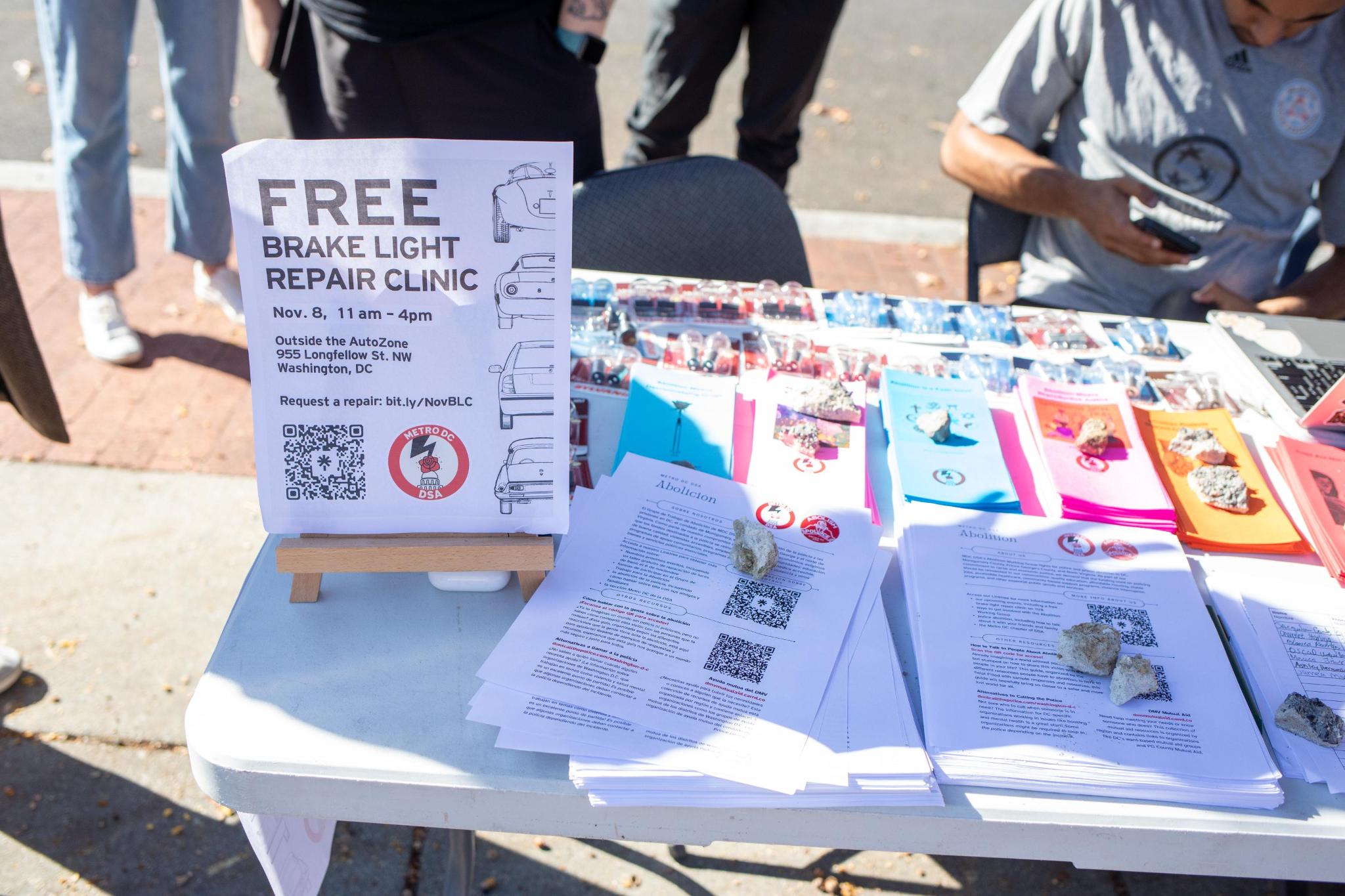
Brake light clinics, held across the United States, are a way for communities to protect each other. To some people, the words “brake light clinic” might not seem abolitionist or even much more than a simple mutual aid effort. But taking a look at the data that our neighbors live out every day tells a different story: in 2020, 76% of police stops in DC for equipment violations were of Black residents (despite Black residents making up only about 46% of the population), ending in about 200 arrests. An even closer look shows how this plays out in specific areas of DC: in the Second District, which is 7.5% Black, 64.5% of non-traffic stops were of Black people. Broken brake lights are often used as an excuse by the police to justify access to Black, brown, and poor residents. This is no small problem: every interaction with the police brings with it the potential for police violence. In DC, Black people are 15 times more likely to be killed by the police than white people; nationwide, over 1,300 people have been killed by the police in 2025 alone. Since August, when the federal takeover of DC began — which has only escalated since, with both police and federal agents murdering our neighbors across the city — it is not uncommon for routine traffic and brake light stops to be led by MPD and a squadron of masked agents from agencies like the FBI, Drug Enforcement Administration (DEA), and Homeland Security Investigations (HSI), the investigative arm of ICE: increasing DC residents’ risk of trauma, deportation, and murder.
As long as the police exist, the threat of the violence they create exists. Abolition means that even as we fight to abolish the police entirely, abolitionists must also fight to reduce police interactions overall. Repairing brake lights is a simple way to reduce the justification that police have to pull people over and force further police interaction.
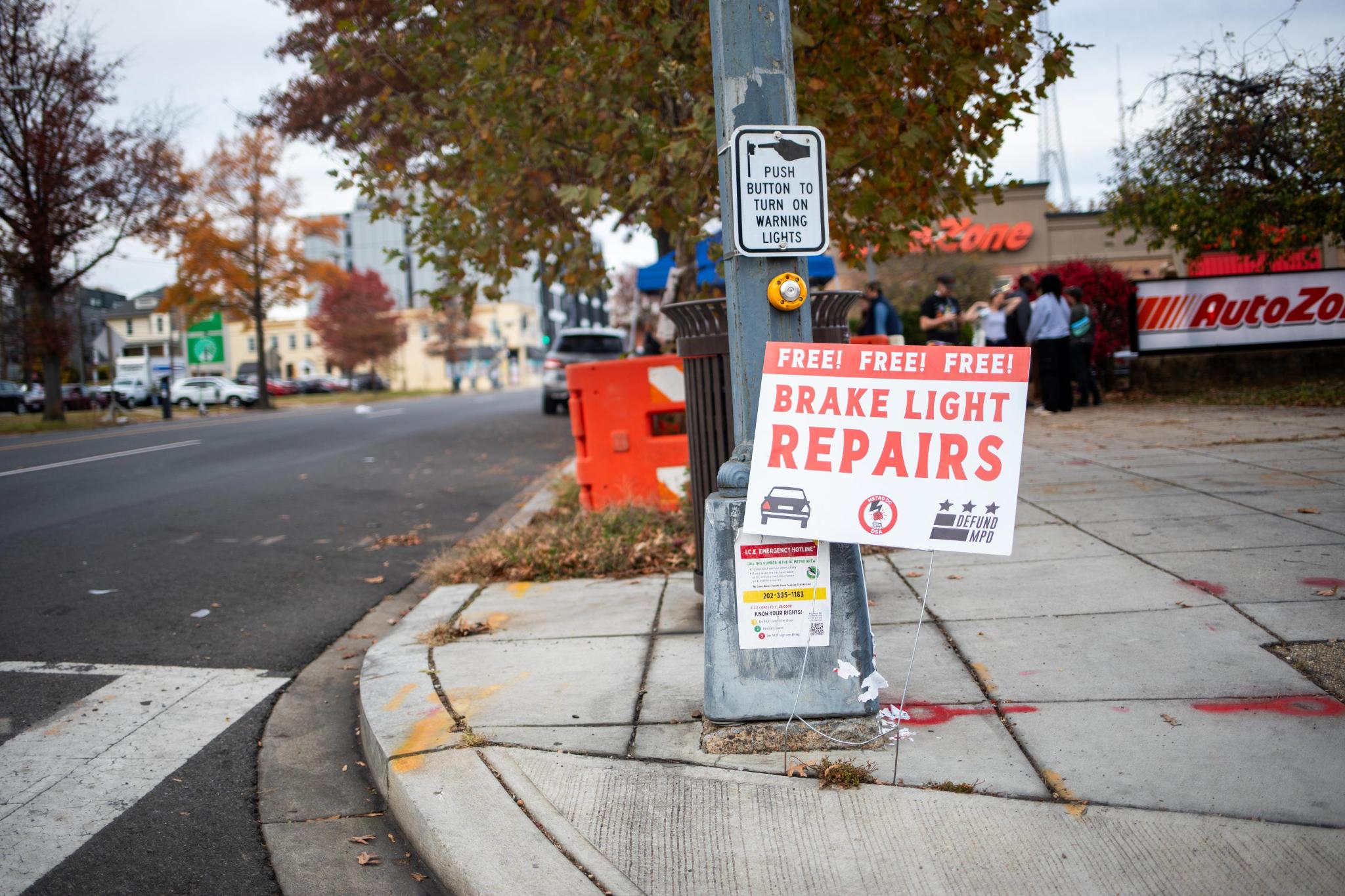
That’s why, in the fall of 2025, the Abolition Working Group hosted a brake light clinic.
Leading up to the clinic, we knew that we needed to move fast: the window of time in which the weather would be amenable to spending all day outside in an AutoZone parking lot was closing quickly. Plus, as the occupation in DC continued, police and federal stops were increasing exponentially. But my comrades and I understood that by decreasing the police’s access to our neighbors, we would reduce the amount of police interactions that could turn violent. And so, within a few weeks, abolitionists had canvassed Ward 4 twice over; shared the event with Ward 4 Councilmember Janeese Lewis George, who promoted it multiple times in her newsletter; trained our comrades in how to repair brake lights; and stocked our day-of prep list with volunteers ready to canvass, repair brake lights, and patrol the area for cops and federal agents. It wasn’t just the socialists who were enthused — we talked to one man who was so excited that he raced down the alleyway waving our flier and yelling to his neighbors about the clinic.
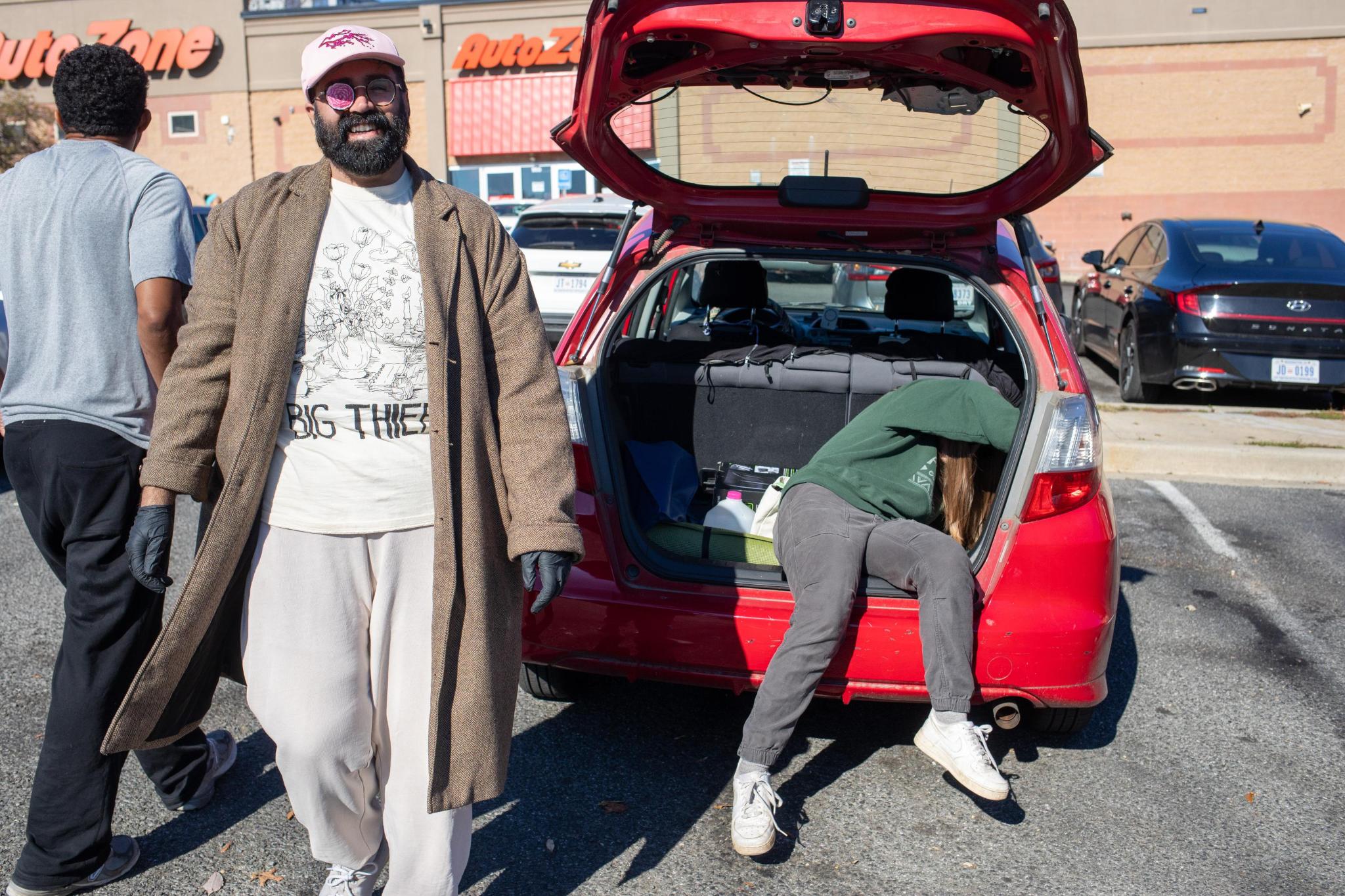
When the day of the brake light clinic finally arrived, the energy was electric. We had pulled together dozens of volunteers from across DC, as well as community members to help patrol the area and ensure that anyone entering or leaving the clinic would have an additional layer of safety. When we “opened our doors” at 11am, we already had a line of people ready to share their car’s make and model number.
That energy was sustained throughout the day — we rarely had a moment where a car wasn’t being worked on.
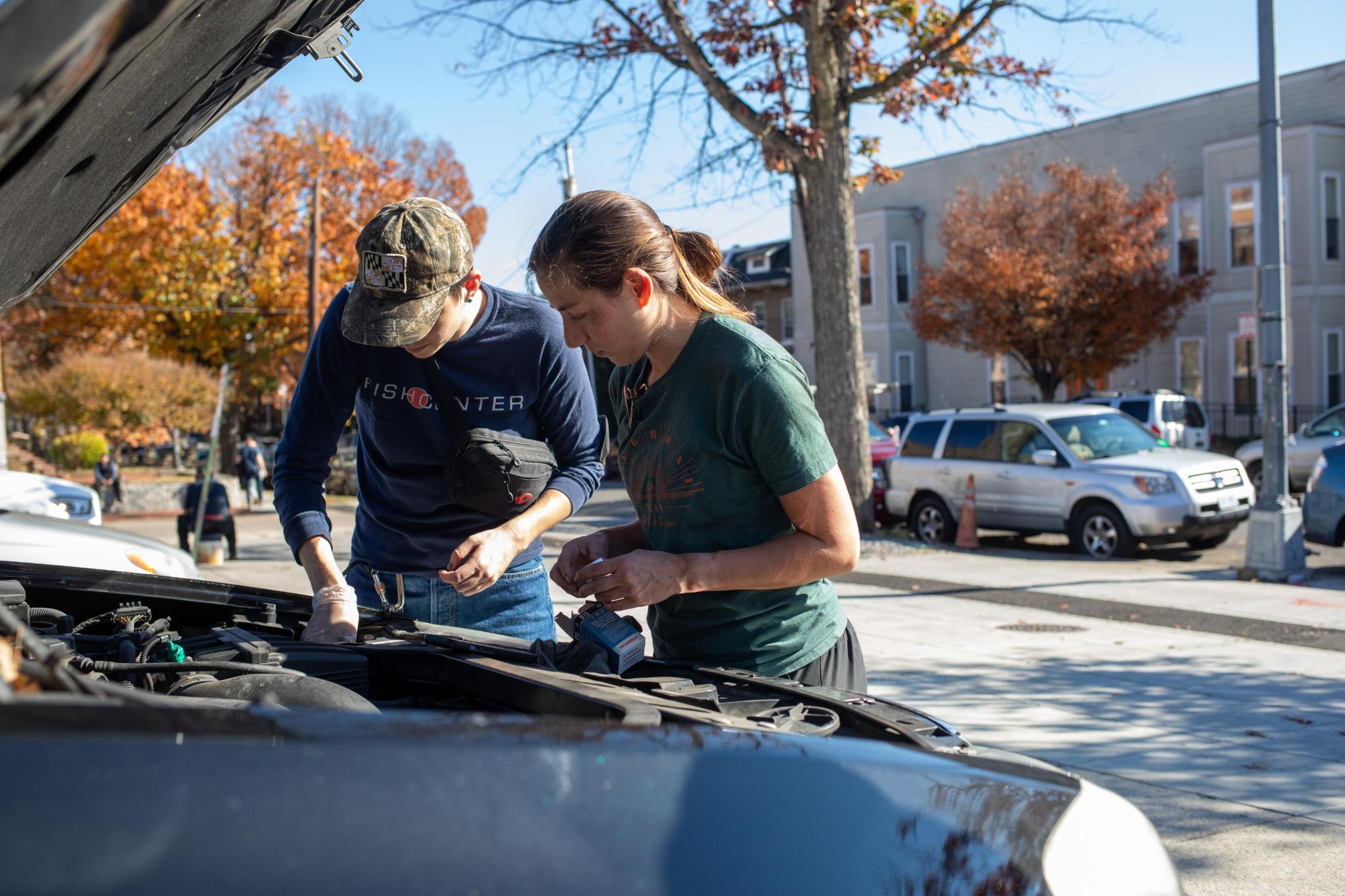
Just as powerful as the actual act of repairing a brake light were the conversations we were able to have with people about abolition. Abolition feels like a difficult topic to broach with people, but it really comes down to safety, and the policing of DC doesn’t make our neighbors feel safe. Everybody we spoke to came to get their brake lights fixed to avoid being pulled over by a convoy of MPD officers and federal agents. Even people walking by stopped at our check-in table to share an incident they knew of, where a traffic stop turned into an arrest that included more agents than they had ever seen before. As we checked people in and offered them snacks or repaired brake lights, people continued to talk about how the occupation is only putting us in more danger and how the MPD has never been about keeping us safe.
Sitting amidst brake lights and toolkits, it was also natural to talk about abolition and transportation: discussing how traffic tickets trap the poor in the carceral system, with DC known for having the highest traffic fines when compared with large US cities (DC has the highest traffic fines per capita at $170 per person; the next closest, Chicago, is $101 per person), or how other cities are working to divest transportation enforcement from the police in order to reduce police interactions. But our conversations always wound up back at the heart of what abolition aims to fight in DC: people feeling oversurveilled, overpoliced, and underprotected. Chatting with our neighbors about abolition while showing what community care looks like was a direct way of living the often-heard chant, “Who keeps us safe? We keep us safe!”
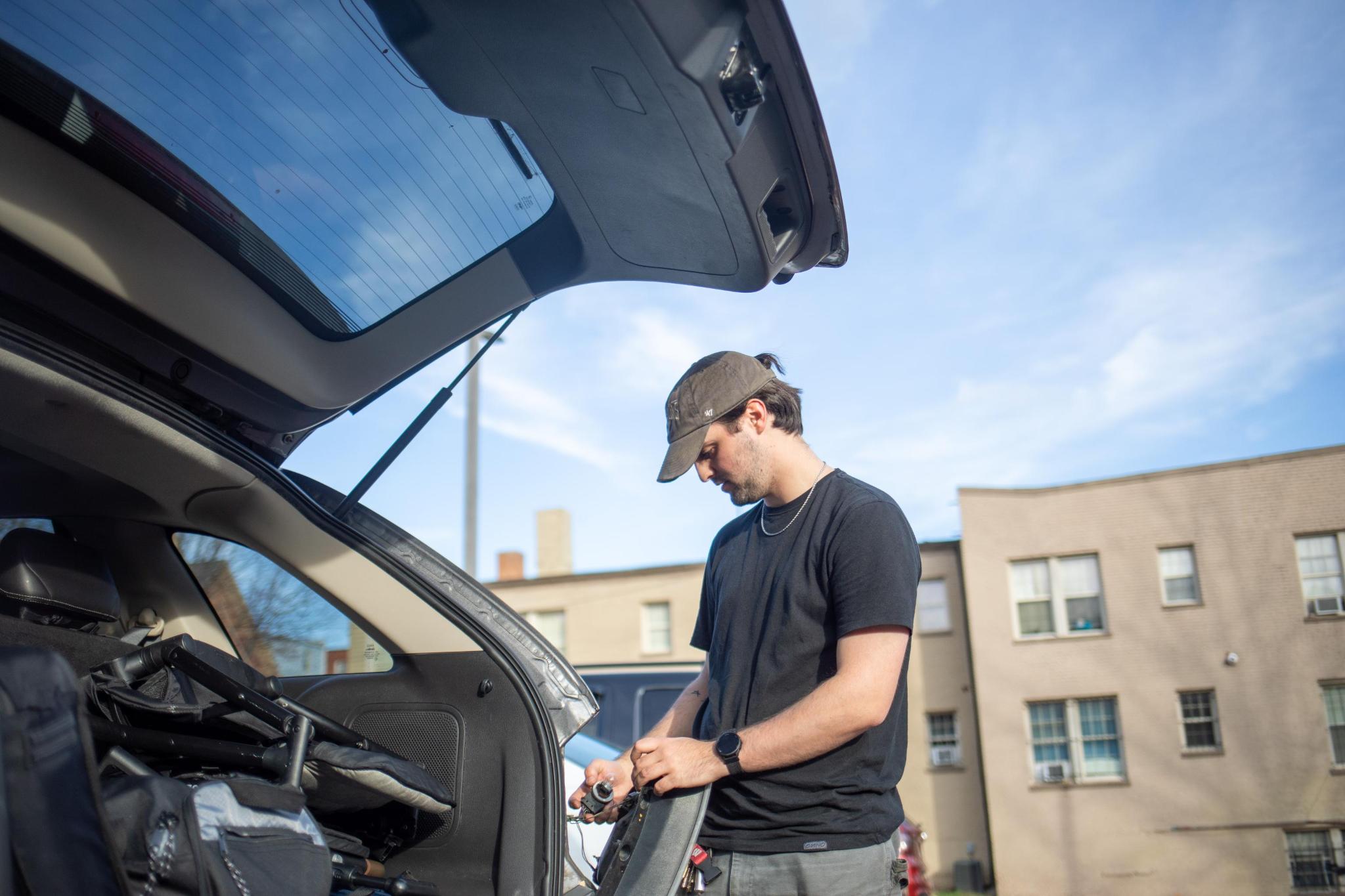
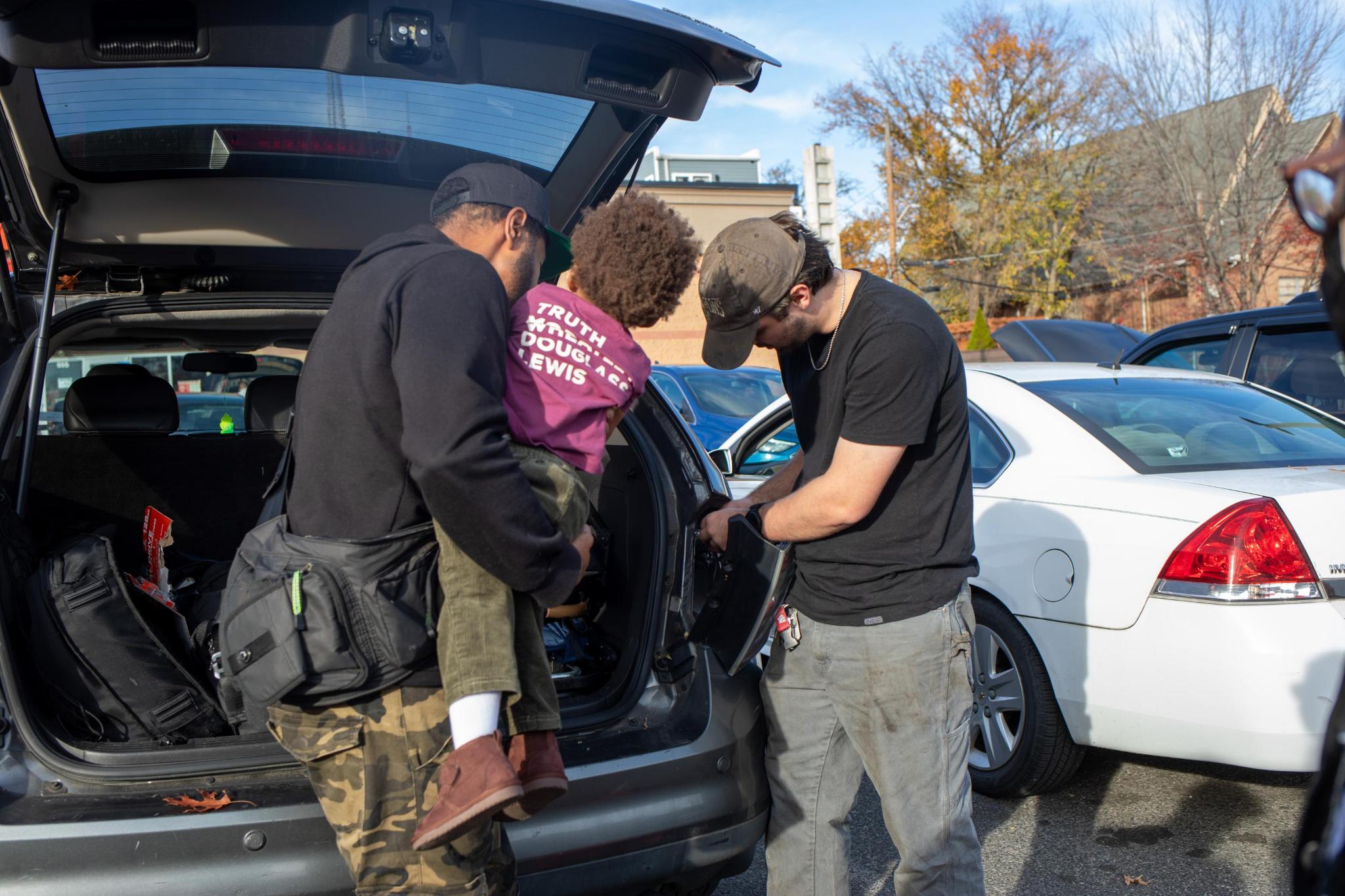
Brake light repairs are relatively simple, even though working on cars might seem intimidating. Throughout the day, we taught people how to change brake lights so that they would feel ready the next time their light, or their neighbors’ light, needed a repair. It’s almost a metaphor for building a police-free society — it just takes a little elbow grease, some partnership with your neighbors, and a willingness to fix things.
A brake light clinic does not dismantle the oppressive policing systems we all live under, but it does reduce harm and show socialists and community members alike what abolition means and looks like in practice. Abolition serves its community by protecting our neighbors a little bit more every time they get behind the wheel of their car. Abolition forges stronger bonds across our communities. And abolition makes it clear that we will always show up to defend each other, even when no one else will.
MDC DSA’s Abolition Working Group is committed to fighting for a police-free society and ensuring that we are all safe, protected, and free. The brake light clinic was one more step toward building that better world.
DC area locals interested in joining the Abolition Working Group and working to prioritize communities over cops can fill out this interest form and get started today.