
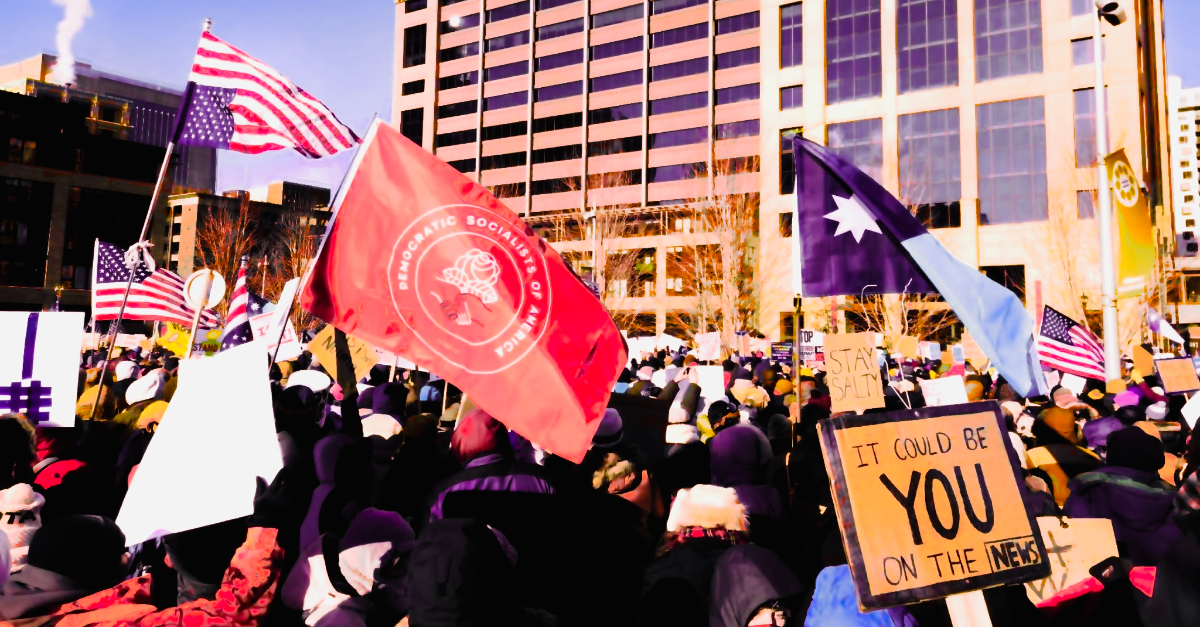
Chad is a member of the Metro DC Democratic Socialists of America and an organizer with the chapter’s Community Defense Working Group.
"...we are simply neighbors gathering, looking out, exchanging notes. We are calling ourselves 'Militant Sesame Street' because that's what it feels like to live here. ...'militant' does not mean militaristic, or recklessly violent, or highly trained; 'militant' means being deeply committed to a collectivist sense of well-being, and being willing to set aside the norms of daily life in order to pursue that horizon."
Keep Whistling: Life Recently in Autonomous Minneapolis by Militant Sesame Street
IN 2025, 2,000 IMMIGRATION AND CUSTOMS ENFORCEMENT (ICE) and Customs and Border Patrol (CBP) agents descended onto the city of Minneapolis in an unprecedented show of federal overreach and state violence. In response, the people of Minneapolis flooded the streets by organizing rapid responses, patrols, block parties, barricades, and mutual aid to protect their neighbors. On January 7, 2026, an agent fired into the windshield of a community rapid responder and mother, Renée Good, killing her. This escalated the brewing anger in the city, and as the number of agents in Minnesota grew to 4,000, the streets exploded. When speaking to organizers in DC about the situation in Minneapolis, many argued that the violence and militant response of the invaders would dampen Minneapolis’s resistance. Remarkably, the opposite occurred: the number of rapid responders skyrocketed, and 50,000 people marched in freezing temperatures through downtown Minneapolis on January 23, 2026, demanding that ICE leave their city.
Despite the city’s defiance, federal agents repeated their murderous actions and fired 10 times into the subdued body of Veterans Affairs Intensive Care Unit nurse Alex Pretti, only one day after the city-wide march. Again, unafraid, the city fought back, bringing so much attention to the Trump administration’s actions that Greg Bovino, the commander-at-large of the CBP and leader of “Operation Metro Surge” in Minneapolis, was relieved of command. While intense federal activity continues in the Twin Cities metro area, large numbers of agents left in the spring of 2026.
Minneapolis’s success at ejecting the invading force inspired the city’s organizers to share the lessons they learned with people around the country. From February 25 to March 1, organizers in the Twin Cities hosted hundreds of people from around the country for what was called the “Melt the ICE” week of action. That included myself and several comrades from the Metro DC Democratic Socialists of America. We traveled to Minneapolis as representatives of both Metro DC DSA's Community Defense Working Group and as organizers in the rapid response efforts in DC, which is experiencing its own federal immigration crackdown and ongoing occupation.
In those few days, we participated in noise demos, rallies, panel discussions, training, and blockades at the Whipple Federal Building (base camp for ICE in the Twin Cities). Speakers and attendees, including ourselves, shared our experiences building systems of resistance against ICE in the hope that these stories could provide inspiration and models for others to apply in their own cities. As expected, we walked away with renewed hope, inspiration, and a desire to strengthen our own efforts in the DMV to prepare us for what we are experiencing now and what may lie ahead.

I have been in discussions with people who claim that it was simply the massive number of surging agents that made the situation in Minneapolis so unique and that the public response was proportional and inevitable — but that could not be further from the truth. Ask anyone in the Twin Cities, and they would say that such a response was only achieved through the lessons they learned and the networks they built during the George Floyd uprising in 2020.
To the people of Minneapolis, the George Floyd uprising was a wake-up call, a disruption to the way people acted and thought about each other. Thousands of protesters marched in the streets, clashing with the police and the National Guard. The overwhelming majority of protesters were not particularly political in the days preceding Floyd’s murder. They were not “activists,” but simply members of a community that had had enough. They realized they could show up, face down a more powerful force, and push it back; a realization that became muscle memory for how to react when faced with another social and political crisis.
The people of Minneapolis learned how to take care of each other. When the 2020 uprising resulted in the destruction of several grocery stores, people in the community quickly banded together to create networks of support and establish food delivery for those in need. They learned how to work together effectively and realized the value of establishing a community ready to jump into action. They also learned how to grieve as a community and acknowledge the pain that this system has perpetrated on all of us.
So, when ICE and CBP began invading their city six years later, this muscle memory kicked in. Neighborhoods reactivated old group chats from 2020 and used them for rapid response and mutual aid. They relied on their shared knowledge and experiences, prepared for whatever happened next. They did not pause and wait for permission. They acted.
Throughout the weekend, Twin Cities organizers argued that one aspect of their success was the decentralization of their response efforts. Without decentralization, the movement would have died before it ever began — because running decisions through a central hub would have eliminated the nimbleness and innovation of the movement. This decentralization didn’t mean that people were encouraged to be independent actors, allowed to do what they wanted with no concern for others; agreements were made and norms were established. It instead allowed people to feel a part of something, rather than in the service of something outside themselves. They felt empowered and connected to the action instead of simply sitting around waiting for directions from self-designated leaders and/or organizations/nonprofits.
Decentralizing led to free-flowing information and the space for people to do the work that they did best (things that are much, much harder to achieve with a more typical leadership structure). Organizers in Minneapolis stressed the importance of information exchange and shared responsibilities among everyone involved, activists and neighbors alike. No single organization or charismatic leader should be favored for being around the longest, for being first, for being the largest, or for having the most funding. Everyone plays a part in the struggle, and it is simply not possible for one group or person to handle everything that needs to be done. Each person must work to their strengths and let go of those things that are not.
A panel with organizers from Minneapolis, Chicago, the East Bay, and Northfield (a rural city south of the Twin Cities) discussed how many nonprofits were scared that sharing information could put immigrant community members at risk, or that simply being associated with radical actions could expose them to legal action or risk having their funding pulled. So they started over-vetting chats and hoarded information like detainment numbers or license plates. When things got worse, when people needed to fight more, these nonprofits receded further and further inward, causing more harm than good. Movements are always going to have infiltrators and bad apples, but the only way to counteract this is by having more people on the ground and more eyes on the streets, so that people who wish to do harm get muscled out and overwhelmed. The smaller the leadership group is, the more power and influence available to those who wish to harm. This does not mean that organizers and activists are careless and ignore dangers; instead, their charge should be to educate people, make sure they assess their risks, and take every opportunity to meet people as people and as members of a community.
At a discussion panel titled "2020 Reflections for This Season," organizers from Relationships Evolving Possibilities and Reclaim the Block discussed the lessons they learned organizing around George Floyd's murder with — and within — NGOs and organizations, namely regarding funding. Funding is necessary for any coalition, group, or movement to survive, not only for purchasing materials but also to pay people for their labor. The panel cautioned that once money is involved, it will always change the nature of the work. More militant or radical tactics might be excluded because they do not appeal to the more moderate donor class. In other cases, the loudest voices driving the work are those with higher education credentials or experience within professional-managerial work environments. Ask yourself: who are the voices centered when the work is being done by people who are not paid, and who are the voices being centered when the work is paid?
The speakers warned us to be wary of this thing called “organization.” Not everything has to live forever, especially organizations. They encouraged organizers to focus on the purpose of the work over the organization itself. Too many times, organizations (or any advocacy group, for that matter) get too focused on themselves, the people within them, and their own hype. But if we are spending too much time working on internal issues, the struggle outside of the organization can end up ignored.
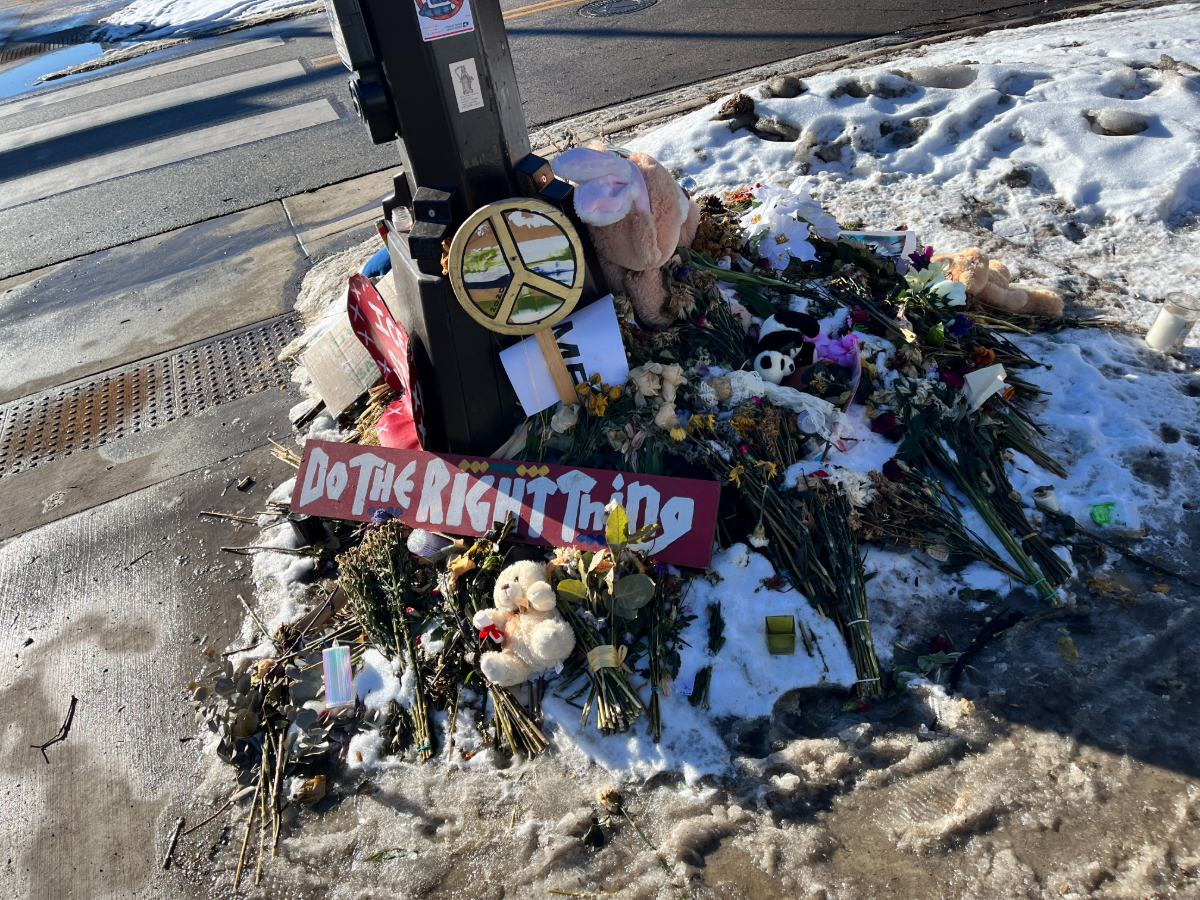
It was obvious throughout the “Melt the ICE” week that organizers in Minneapolis were wary of NGOs and organizations that projected themselves as established leaders or experts. The surge was an unprecedented event, and it would be absurd to claim that any one group or person knew exactly what to do. Instead, they found that it was the organic leaders, those who emerged and developed from the action on the ground, who became the people that communities turned to for knowledge and inspiration.
A lot of people in Minneapolis were not originally opting into action; it was coming to their neighborhoods. The atrocities they saw and the anger they felt radicalized them, and it became essential to provide political education along with rapid response training. This provided leadership, mentorship, and trust across the city for radical and everyday people.
The highlight of my stay was the car patrol that I participated in with Northeast/Southeast (NE/SE) Minneapolis patrollers. The trainer of this group explained that things in the city were so active at one point that this group of trainers was conducting two training sessions a day, seven days a week, which required a lot of sacrifice on their part. They spent time away from their families, their friends, and for some, their jobs (we ran into more than one person who had been fired due to the time they were spending on rapid response work). The NE/SE patrollers are not an organization, and they receive no funding, so they are not paid for their efforts. They are simply a group of community members dedicated to making a change.
The NE/SE patrollers believe that their success over the last several months depended on trainers and rapid response veterans willingly and openly taking the role of leaders. In turn, they said, these leaders need to bring their stories and experiences as an offering to the community, because everyone in the community needs the same knowledge to be effective. This is done with face-to-face training (anyone can read an online handbook or slides); with connections, from one person to another, from one experience to another.
The story of Minneapolis is one of confrontation. When a taqueria was raided by ICE at the beginning of June 2025, hundreds of protestors gathered, shouting at federal agents while they shoved and released chemical weapons. When their local leaders called for calm and urged people to remain peaceful, the people of Minneapolis chose to fight back against an armed and ruthless invading force.
Throughout our stay, panel speakers talked about these confrontations and the willingness of the people of Minneapolis to take direct action. And we witnessed this ourselves at protests, rallies, demos, and blockades. We also were able to hear personal stories, like those shared with us by a car patroller we had the chance to ride along with.
This car patroller told us that they started doing this work on their own, right after the killing of Alex Pretti. Filled with rage and disgust, they decided to get up and do something. They grabbed a whistle and left the house, looking for ICE. Since then, they have connected with a larger group of patrollers, had experience after experience facing off with ICE, and spent hours patrolling the street. As we passed a gas station, they said, "That's where a group of us confronted Greg Bovino and a horde of ICE agents."
This was a common story in Minneapolis. I do not know the level of activism my driver had in the past, but before Alex Pretti was murdered, they were waiting at home with their child, unsure of what they could contribute to the madness that was going on in the city. That one event jolted them awake, and they could no longer ignore the urge to find, confront, and drive out an invading force.
Each confrontation strengthened that militancy and resiliency. I was frequently told that participating in rapid response felt empowering. It was the people’s chance to show ICE that they were not afraid and that they would not simply stand by while their neighbors were abducted. In November of last year, there were 2,500 people trained as rapid responders in the state, but by February, that number had ballooned to 30,000 in 77 out of 87 counties in Minnesota.
Northfield's rapid response efforts were especially impressive. At last count, they had 30 rapid responders. This may sound insignificant, but Northfield is a rural city of 20,700 people. This tells us that the people of Minnesota, not just the Twin Cities, were ready to take action.
The energy of Minneapolis was on full display on January 23, when 50,000 marched through downtown Minneapolis in 20-below weather, demanding an end to the occupation of their city. Labeled as the “ICE Out of Minnesota: Day of Truth and Freedom,” this action called for “no work, no school, no shopping” (essentially, an economic blackout). Estimates are that 1,000 businesses either reduced their sales or completely stopped all business for the day. Nearly one in four adults in Minnesota (1.5 million people) participated in the day of action in some way, and an estimated 8% of all Minnesotans refused to work that day.
During the course of the week, organizers expressed that none of this could have been done without the efforts of rank-and-file union members and the grassroots. When residents of Minneapolis first approached nonprofit and union leadership regarding a "general strike," they were quickly turned down. United States labor law outlaws wildcat and secondary boycotts and strikes, so essentially, union participation in general strikes is illegal. This, along with other restrictions and no-strike clauses, makes the idea of a general strike poisonous to labor union leadership. Unions were simply too worried about what this could do to them financially and legally. But ultimately, the unions had to concede in some way. As one Minneapolis union organizer told me, "They had no other choice. The people were going to have it anyway."
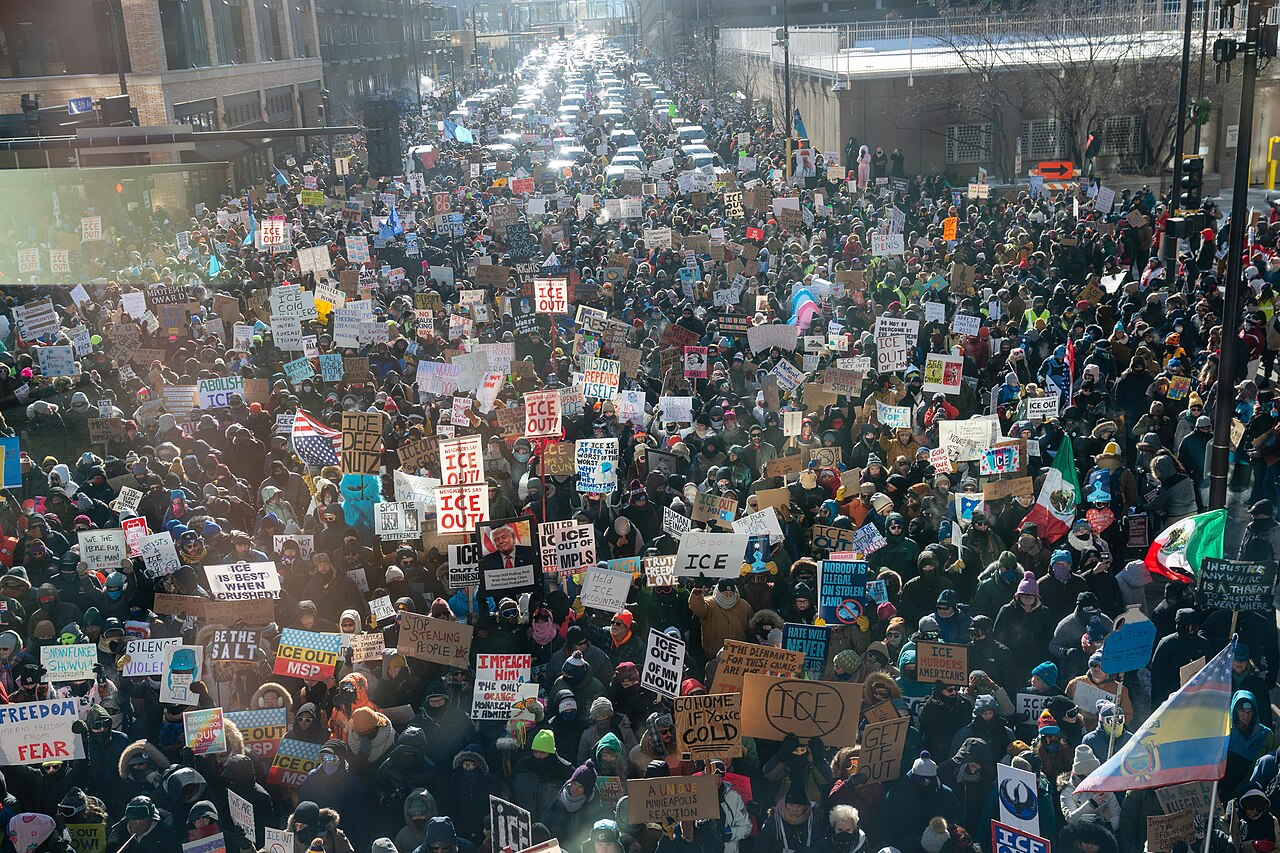
Community was mentioned more than anything else during those few days in Minneapolis. It was considered the "secret sauce" of their success and was the critical holdover from the George Floyd uprising.
The sense of community was keenly visible in the rapid responder/patroller spaces. The concept of rapid responder/patroller/community defender has become an identity that everyone in Minneapolis shares, no matter their level of involvement. Free whistles, notebooks, and instructional zines are available everywhere in the city. In Minneapolis, this is how people contribute to the safety and maintenance of their way of life.
Coming around full circle, organizers stressed that effective rapid response requires people living in the affected areas to build relationships within them. Many organizers noted that immigrants from the area saw the patrollers and rapid responders in their community; that, in turn, led to more trust in patrollers. Community deepened in the exchange of information and knowledge: neighbors shared best practices, local resources, and self-care tips. This all served to solidify the reality that everyone was working towards a common goal as a united people. Community- and relationship-building is not only necessary for the work during a crisis, but also for preparing for the future. And that future depends on taking care of each other and taking care of ourselves.
A smaller force defeats a larger opponent by hitting weak or vital points in the system, eventually wearing them down. That work takes energy and time. Too many times, organizers and activists burn themselves out. Organizers in Minneapolis regularly address burnout head-on and stress the necessity of self-care to keep up the fight.
Before a training during the week of action, I went to a coffee shop where make-shift shelves against a far wall caught my eye. I saw that the shelves were full of free items available for rapid responders and community members alike. Aspirin, band-aids, masks, protein bars, eye drops, and more — all packed in plastic bins ready for whenever a community member was in need. They even had detachable ice cleats for those freezing temperatures and icy sidewalks.
These acts of support and community were everywhere, in shop after shop and in places of worship throughout the city. Direct actions freely provided mutual aid. When a federal truck pulled in with a long-range acoustic device (LRAD), responders pulled out bins full of earplugs to provide as much protection as possible. Another action at a detention center featured a DJ who played cumbia music for both the attendees and those behind the wall, as well as chants of "We love you" from the megaphone.
The panel with members of Relationships Evolving Personalities and Reclaim the Block emphasized the importance of preserving yourself for the long haul. They realized in the wake of the George Floyd uprising that there are immediate reactions to circumstances, and then there is the longer-term work. These are not isolated actions. They are connected and flow. So you must maintain your spirit in the short term to make the long-term changes. Martyrdom does not bring liberation.
It was probably a day or two after I returned home that I took the opportunity to glance through the handouts and zines I collected during my stay. Keep Whistling pulled me in: what the fuck is a militant Sesame Street? The answer to that can be found in the quote at the beginning of this article — but it can also be found in the deeds of the people of Minneapolis. Every day, for months, neighbors took care of neighbors. Standing guard on street corners in the snow, escorting children to school, and delivering groceries to those who were too vulnerable to leave their homes: what they call "unextraordinary work," but necessary in the fight against oppression, violence, and fascism. This is community, pure and simple. And if you contribute to this in any way, you are considered a part of that community.
I have heard from several people in DC that the reaction from the people of Minneapolis was exaggerated, that the confrontations between average community members and ICE were single incidents, overhyped, and social media fodder. But I can tell you, after meeting the people on the ground, hearing their stories, and seeing their fight, that this is simply not true. The people of Minneapolis had the militancy and the will to fight back because it was planted years ago and allowed to grow. People in the Twin Cities didn't raise an army, and they didn't take up arms. But they did have courage, ingenuity, and a concept of their place amongst a much larger social system that allowed them to outmaneuver ICE and frustrate them at every turn.
We were not quite sure what to expect when we signed up for Melt the ICE. Over 100 unvetted leftists from around the country converging on one city: what could go wrong? The end of February was not a period of calm in Minnesota. The organizers were holding this event while large amounts of ICE agents still terrorized their neighborhoods, despite a so-called "draw-down." This event would have been an enormous challenge for a city not facing these extreme circumstances. But using the very same principles shared throughout the week of action — cooperation, empowerment, militancy, and community — they were able to organize a truly inspirational event.
In many ways, Minneapolis has shown us what is possible. Not simply the response of a mobilized, militant community, but also the lengths that a despotic administration will go to in order to increase its power and accomplish its racist policies. The Trump administration’s blatant disregard for the Constitution could present an unseen problem: have these surges yanked the Overton Window so far to the right that any amount of draw-down seems like a blessing, or that American citizens accept this as simply the status quo?
The majority of DC residents, its leaders, and organizations are already forgetting what is happening here (or have simply chosen to move on). I have heard of countless conversations that organizers have had with friends who did not realize that the federal immigration crackdown here did not end in August of 2025. The National Guard, a military force directed by the president to police our city, still roams our streets and harasses our youth. Federal law enforcement stalks our neighborhoods, targeting people of color for minor offenses just to allow an egotistical maniac to claim that he is making DC safe and beautiful. All the while, our leaders and the Metropolitan Police Department (MPD) condone and collaborate. For the people of DC, this occupation has not left. We have to decide: will we continue to ignore what is happening, or can we take action and fight for all residents of the District? Can we start to build our own militant Sesame Street?
Metro DC DSA’s Community Defense Working Group is attempting to do just that. Nine months ago, members of this working group organized patrols in one of the hardest hit areas of the District, and those patrols continue today. We have marched to the doorsteps of our councilmembers, demanding oversight of the MPD and their collaboration with federal law enforcement. This work played a large role in requiring MPD to document the identifying information of federal agents at the scene of an arrest. We have been, and will continue to be, a force of resistance in DC.
But the fight is not over, and the landscape is constantly changing. We must be capable of outthinking our opponent and bringing people into the struggle. So join us and be a part of this work. Visit the Community Defense Working Group’s Instagram, and sign up to be part of our mailing list and be kept up to date on rapid response, direct action, and educational opportunities. We, too, can simply be neighbors gathering, looking out, exchanging notes. We, too, can kick occupiers out of our community.


